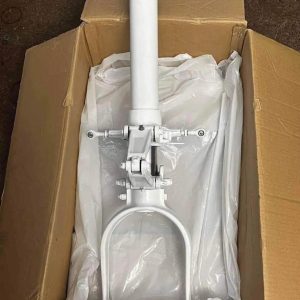
The Cessna Nose Gear Strut Assembly provides structural support, shock-management capability, and ground-handling stability for an appropriately verified Cessna aircraft installation.
The Cessna Nose Strut may provide shock absorption and structural support, but actual functions depend on the complete assembly and aircraft configuration.
Clear descriptions help buyers determine whether the listing includes a complete assembly, partial strut, housing, piston, fork, or related hardware.
These related terms help connect the product with aircraft owners, maintenance facilities, restorers, and general aviation parts buyers.
A Cessna Steering Strut Assembly may interact with steering rods, collars, torque links, springs, stops, bushings, and model-specific linkage components.
Reviewing the Cessna Front Gear Configuration
A unit should not be accepted as compatible solely because it came from an aircraft within the same general Cessna family.
Informal descriptions such as complete or ready to install should be supported by an exact inventory.
Evaluating Landing Gear Structural Responsibilities
The strut must manage those loads without excessive looseness, binding, deformation, leakage, or structural distress.
A replacement strut cannot correct damaged airframe attachment points or distorted landing-gear geometry by itself.
Maintaining Controlled Compression
Complete functional evaluation is more reliable than visual appearance alone.
The aircraft’s actual loaded condition affects visible strut extension and should be considered during evaluation.
Maintaining Predictable Taxi Control
The nose gear may interact Aircraft Landing Gear Strut with the aircraft steering system through collars, torque links, rods, springs, cables, stops, bushings, or other model-specific mechanisms.
Towing procedures should respect the aircraft’s steering limitations.
Verifying Illustrated Parts Catalog Information
Two aircraft with similar outward appearance may use different struts, forks, cylinders, steering features, hardware, or mounting arrangements.
Supplemental modifications, replacement forks, wheel conversions, tire changes, steering alterations, and airframe repairs can affect compatibility.
Protecting Smooth Strut Operation
Paint, grease, or contamination should not conceal suspected defects.
The cylinder bore, piston diameter, and relevant clearances may require professional measurement.
Understanding Strut Seal Maintenance
Repeated wiping without correcting the source does not constitute proper repair.
Any internal maintenance should be documented with parts and procedures used.
Maintaining Protective Finishes
Corrosion may develop on external surfaces, inside bores, around fasteners, beneath paint, near mounting points, or within neglected fluid areas.
Fastener holes, fork transitions, cylinder ends, and welded or machined areas deserve close attention.
Checking for Hard-Landing or Towing Damage
The assembly should be inspected for cracks, bending, twisting, damaged welds, distorted mounting features, and impact marks.
Hard landings, runway excursions, tow-bar incidents, shimmy, collapsed tires, obstacle contact, and freight damage can affect the nose gear even when external deformation appears minor.
Maintaining Wheel and Tire Geometry
Fork alignment influences wheel tracking, steering response, tire wear, and clearance around fairings or nearby components.
Wheel bearings, seals, spacers, and retaining hardware should be evaluated separately rather than assumed serviceable because they are attached to the assembly.
Inspecting Landing Gear Articulation Components
Tightening hardware alone may not correct worn bushings or elongated holes.
System-level maintenance protects the Aircraft Nose Landing Gear Assembly.
Evaluating Wheel Alignment and Steering Play
Operational reports should identify when the vibration occurs and under what taxi or landing conditions.
A new tire can mask but not correct underlying geometry problems.
Servicing the Cessna Shock Strut
Incorrect fluid, contamination, trapped air, overpressure, or underpressure can affect extension, damping, leakage, ground clearance, and structural loading.
Extension should be evaluated under the loading condition specified by applicable maintenance data.
Distinguishing Inspection from Overhaul
The exact scope should be defined in the work records rather than assumed from the word overhauled.
Reconditioning decisions depend on structural condition, dimensional limits, corrosion depth, surface damage, repair data, parts availability, and cost.
Cessna Front Gear Condition Review
Any uncertainty regarding fitment, impact history, corrosion, leakage, repairs, or package completeness should be resolved before shipment.
- Confirm the complete Cessna part number, dash number, serial or casting markings, aircraft model, serial-range applicability, strut type, dimensions, and configuration.
- Do not treat clean paint, smooth movement, or a removed-serviceable statement as proof of current installation eligibility.
- Report shipping damage, missing components, identification differences, undisclosed repairs, corrosion, leakage, or dimensional concerns promptly.
Shipping the Cessna Nose Gear Assembly
The chrome or polished piston area should receive protective wrapping that prevents impact and contamination without trapping moisture.
Forks and mounting features should not be used as uncontrolled lifting points unless approved for handling.
Protecting the Cessna Nose Strut
During storage, the strut should remain clean, dry, supported, labeled, and protected from impact, moisture, chemicals, dust, and uncontrolled handling.
Organized storage supports the commercial value of General Aviation Landing Gear Parts.
Professional Installation of the Nose Gear Strut
Surrounding structure should be inspected for cracks, corrosion, deformation, worn holes, and previous repair before installing the replacement assembly.
Hoses, wiring, fairings, controls, and nearby components should maintain suitable clearance through the steering and compression ranges.
Taxi checks should begin conservatively and should monitor shimmy, pulling, vibration, abnormal noise, leakage, and steering behavior.
Caring for the Strut, Fork, and Steering System
Consistent care supports dependable Cessna Nose Landing Gear Strut operation.
Preventive care protects the aircraft, occupants, and landing-gear components.
Choosing a Documented Aviation Component
The commercial value of a Cessna Nose Gear Strut Assembly depends on exact identification, aircraft applicability, completeness, physical condition, corrosion status, leakage, repair history, overhaul records, included hardware, and documentation.
Commercial evaluation should focus on verified suitability rather than promotional claims.
Buying a Replacement Cessna Front Gear Assembly
When thoroughly evaluated and correctly installed, the Cessna Nose Gear Strut Assembly can become a valuable component within the aircraft’s complete landing-gear system.
Buyers should request current photographs, accurate measurements, transparent condition information, professional inspection details, protected freight arrangements, secure transaction terms, and qualified maintenance review.
Whether the requirement is a Cessna Nose Landing Gear Strut, Cessna Nose Gear Assembly, Cessna Landing Gear Strut, or Cessna Nose Strut, exact identification should guide the purchase.
With transparent records, protected shipping, correct steering and mounting compatibility, careful alignment, and appropriate maintenance, the Cessna nose gear can support a professional repair project.